California Thrasher
During the rainy season, which coincides with the breeding season, California Thrashers eat mostly insects and other arthropods. They forage by sweeping the bill through the leaf litter and looking for prey, which they seize with a quick pounce. They watch the ground for movement and often excavate by probing and gaping (inserting the bill into the ground, then opening it).
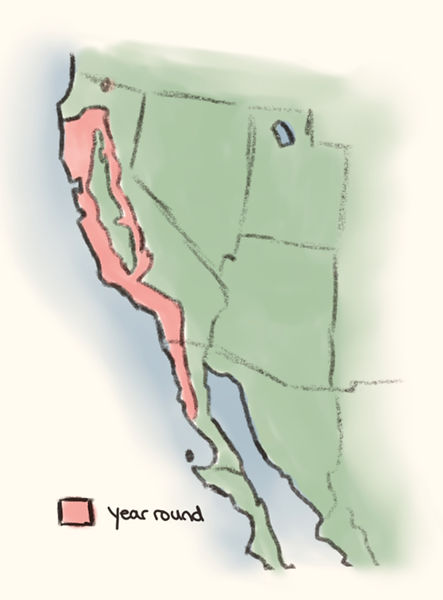
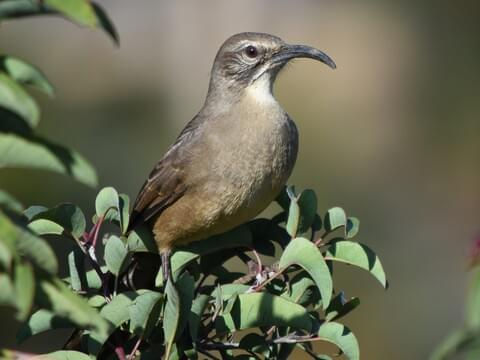
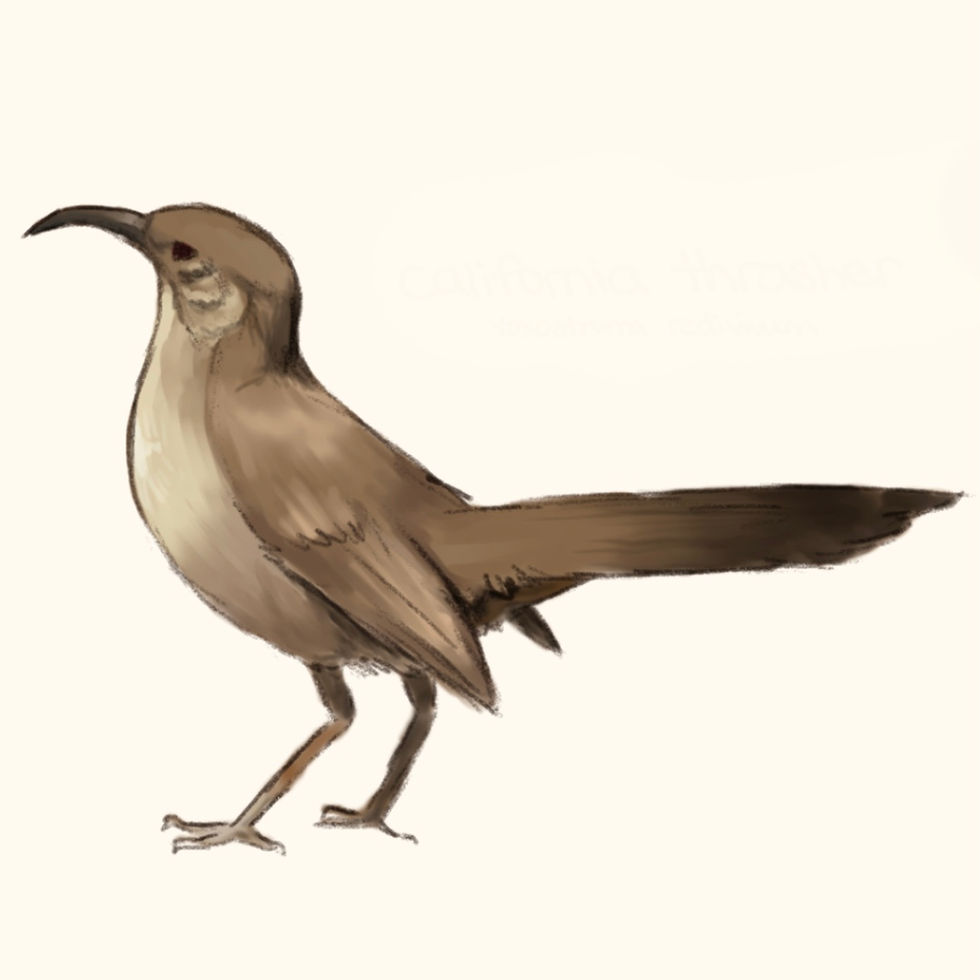
The California Thrasher is a distinctive songbird native to California and parts of northwestern Baja California, Mexico. With its warm brown plumage, long tail, pale throat, and dramatically curved bill, this bird is well adapted to life among the state’s dense shrubs and coastal chaparral.
Despite its secretive nature, the California Thrasher is an accomplished singer. Like its relative, the Northern Mockingbird, it can incorporate imitations of other birds into its own complex, melodious song. Listen carefully in the early morning, especially during the breeding season, and you may hear its varied calls rising above the surrounding brush.
The thrasher spends much of its time foraging on the ground, sweeping its curved bill through leaf litter and soil to uncover insects, spiders, and other small invertebrates. It also eats berries and other fruits, particularly when insects become less abundant. Its long legs and tail help it move through thick vegetation, and when startled, it often runs swiftly through the underbrush rather than taking flight.
California Thrashers depend on dense chaparral and other shrubby habitats for food, shelter, and nesting. Both parents help build their nest, defend their territory, and raise their young. Although the species remains present across much of its range, habitat loss and urban development have affected populations in some areas, making the conservation of California’s native shrublands important for its future.
Where to spot one: Look for California Thrashers in coastal sage scrub, chaparral, oak woodland edges, and brushy parks and gardens throughout Southern California. Rather than searching the treetops, watch the ground beneath dense shrubs and listen for their rich, varied songs. You may hear one long before you catch a glimpse of it.
thrasher - toxostroma redivivum